
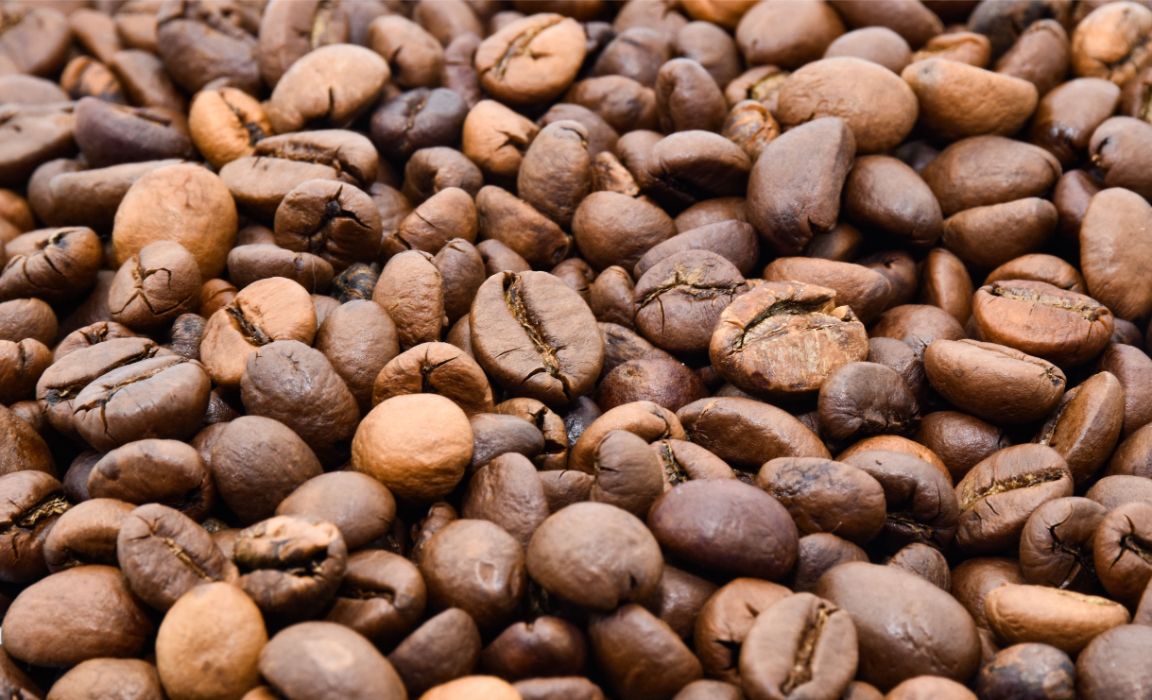
Swiss Water Process decaf is coffee that has had most of its caffeine removed from the green, unroasted beans using water, coffee-derived compounds, temperature, time, and carbon filtration rather than an added chemical solvent.
The process is designed to remove 99.9% of the caffeine while retaining as much of the coffee’s original character as possible.
That does not mean every Swiss Water coffee tastes identical, automatically tastes better than other decaf, or contains absolutely no caffeine. The original beans, roast quality, freshness, storage, and brewing still have a major influence on the cup.
Its main appeal is straightforward: it gives people who prefer a water-based, solvent-free decaffeination method a clearly identified option.
Swiss Water Process Decaf at a Glance
| Question | Practical answer |
|---|---|
| What is it? | A proprietary water-based method for removing caffeine from green coffee beans |
| Does it use an added chemical solvent? | No. It uses water, Green Coffee Extract, temperature, time, and carbon filtration |
| How much caffeine is removed? | The process is designed to remove 99.9% of the caffeine |
| Is the finished coffee completely caffeine-free? | No. Trace amounts can remain in brewed decaf |
| Does it always taste better? | No. Taste still depends on the original coffee, roasting, freshness, and brewing |
| Is every water-processed decaf Swiss Water? | No. Swiss Water is a specific proprietary process and brand |
| Is it automatically organic? | No. The process can preserve an existing organic certification, but the original coffee must also qualify |
| Is it the same as low-acid coffee? | No. Decaffeination and acidity are separate characteristics |
| Best reason to choose it | You want low-caffeine coffee made without an added decaffeination solvent |
How the Swiss Water Process Works
The caffeine is removed before the coffee is roasted.
The process begins with green coffee beans rather than the brown roasted beans you grind at home. That matters because decaffeination must reach caffeine inside the bean while trying to preserve the soluble compounds responsible for much of the coffee’s flavor and aroma.
Step 1: The green coffee is cleaned and hydrated
The unroasted beans are cleaned and exposed to carefully controlled moisture.
Hydration prepares the structure of the beans so caffeine can move outward during the next stage. The goal is to make the caffeine accessible without unnecessarily removing the other soluble coffee components.
Step 2: The beans meet Green Coffee Extract
The hydrated beans are placed in Green Coffee Extract, commonly shortened to GCE.
Green Coffee Extract is not a bottle of brewed coffee intended for drinking. It is a carefully prepared water-based solution containing the soluble components naturally found in green coffee, but without caffeine.
Because the surrounding liquid already contains coffee’s other soluble components, those compounds have less reason to migrate out of the beans. Caffeine, however, is present in the beans but absent from the surrounding extract.
Step 3: Caffeine migrates out of the beans
The difference in caffeine concentration encourages caffeine molecules to move from the beans into the Green Coffee Extract through diffusion.
This is the central idea behind the process.
Rather than using a solvent that selectively bonds with caffeine, the system creates conditions in which caffeine naturally moves into the surrounding liquid while much of the coffee’s other soluble material remains in the bean.
Step 4: Carbon filters capture the caffeine
The caffeine-containing Green Coffee Extract passes through specialized carbon filters.
The filter system traps caffeine molecules while allowing the refreshed coffee extract to continue circulating.
The renewed extract can then draw more caffeine from the beans without starting over with plain water that could remove a broader range of flavor compounds.
Step 5: The cycle continues
The extract continues moving between the beans and the carbon filtration system until the coffee reaches the required level of decaffeination.
Swiss Water describes its finished green coffee as 99.9% caffeine-free.
This is not the same as saying a brewed cup contains exactly zero caffeine. Small amounts can remain, and the final amount in a drink also depends on the coffee dose and serving size.
Step 6: The beans are dried
After decaffeination, the beans are dried to a stable moisture level before being shipped to a coffee roaster.
The roaster then treats them as green coffee: developing an appropriate roast profile, allowing the roasted coffee to rest, packaging it, and eventually selling it as whole bean or ground decaf.
What Is Green Coffee Extract?
Green Coffee Extract is the part of the process that is easiest to misunderstand.
If ordinary water were used throughout the entire process, it could draw out caffeine along with sugars, acids, aroma precursors, and other soluble coffee compounds.
Green Coffee Extract is already saturated with many of those non-caffeine coffee components.
That creates an imbalance:
- The beans contain caffeine.
- The surrounding extract does not.
- Both the beans and extract contain many of the other soluble coffee components.
Caffeine therefore moves toward the extract while the process aims to keep more of the flavor-related material inside the beans.
The Green Coffee Extract is reused within the filtration cycle rather than discarded after one contact with the beans.
Does Swiss Water Decaf Use Chemicals?
Swiss Water does not use an added chemical solvent such as methylene chloride or ethyl acetate to extract caffeine.
The company commonly describes its process as chemical-free. In practical consumer language, that means no decaffeination solvent is added.
Scientifically, water, caffeine, carbon, acids, sugars, and every other substance involved in coffee are chemicals. Saying “no added solvent” is therefore more precise than suggesting no chemistry is involved.
The process relies on:
- water
- Green Coffee Extract
- temperature
- time
- diffusion
- carbon filtration
How Much Caffeine Is Left?
Swiss Water states that its process removes 99.9% of the caffeine from the green coffee.
A cup brewed from those beans should still be treated as decaffeinated rather than completely caffeine-free.
Typical decaf coffee can contain approximately 2–15 milligrams of caffeine in an eight-ounce cup, compared with roughly 95 milligrams in a typical caffeinated cup.
The exact amount can vary with:
- the original coffee
- the amount of caffeine removed
- coffee dose
- brewing method
- brew ratio
- serving size
- whether multiple espresso shots are used
Someone who must closely limit caffeine should include decaf coffee when calculating total intake rather than assuming it contributes nothing.
Swiss Water Process vs Other Decaf Methods
Swiss Water is one of several established ways to remove caffeine from green coffee.
| Method | How caffeine is removed | Practical distinction |
|---|---|---|
| Swiss Water Process | Green Coffee Extract, diffusion, and carbon filtration | No added decaffeination solvent |
| Direct-solvent process | A regulated solvent contacts the prepared beans and selectively removes caffeine | Efficient and widely used |
| Indirect-solvent process | Water removes soluble compounds, and a solvent removes caffeine from that water before flavors return to the beans | The solvent does not directly soak the beans during the main extraction stage |
| Carbon dioxide process | Pressurized carbon dioxide selectively removes caffeine | Often used for larger commercial batches |
| Other water processes | Water-based extraction and filtration systems | Not automatically the proprietary Swiss Water Process |
All of these methods can produce enjoyable decaf when the original green coffee is good and the process, roasting, storage, and brewing are handled well.
The method is one decision factor. It should not replace attention to the actual coffee inside the bag.
Is Swiss Water Decaf Safer Than Solvent-Decaffeinated Coffee?
Swiss Water avoids the added solvents used by some other decaffeination systems. That makes it appealing to people who specifically prefer a water-based method.
It does not mean regulated solvent-decaffeinated coffee should automatically be described as unsafe.
Established decaffeination methods are subject to food-safety standards, and solvent residues are tightly controlled. The National Coffee Association describes the major commercial methods as regulated and safe when properly performed.
The practical difference is one of process preference:
- Choose Swiss Water when avoiding an added decaffeination solvent matters to you.
- Do not assume another decaf is harmful solely because it uses a regulated solvent process.
- Judge broader health questions using evidence rather than marketing language.
Does Swiss Water Decaf Taste Better?
It can taste excellent, but the name alone does not guarantee that it will.
The process is designed to preserve the original characteristics of the green coffee. Whether those characteristics produce a great cup still depends on several later decisions.
Important factors include:
- the quality of the original green coffee
- how long the green coffee was stored
- the roaster’s decaf-specific roast profile
- roast date
- packaging
- grind quality
- water
- brew ratio
- equipment cleanliness
A carefully sourced and roasted solvent-process decaf can taste better than an old or poorly roasted Swiss Water coffee.
Buy the process you prefer, but also evaluate the coffee as coffee.
What Does Swiss Water Decaf Taste Like?
There is no single Swiss Water flavor profile.
The process can be applied to coffees from different origins, varieties, elevations, and processing styles. The finished decaf may therefore taste:
- chocolatey and nutty
- caramel-like
- fruit-forward
- floral
- bright
- earthy
- light and tea-like
- heavy and roast-dominant
The roast level may have a stronger immediate effect on the flavor than the name of the decaffeination process.
A darker decaf may emphasize chocolate, smoke, bitterness, and body. A lighter roast may retain more fruit, floral aroma, and origin character.
Is Swiss Water Decaf Automatically Organic?
No.
The Swiss Water decaffeination facility and process can preserve the organic certification of green coffee that already qualifies as organic.
But the Swiss Water name by itself does not prove that the coffee was organically grown.
Look for two separate pieces of information:
- The coffee is identified as Swiss Water Process decaf.
- The bag carries a recognized organic certification when organic sourcing matters to you.
A non-organic coffee can still be decaffeinated through Swiss Water. An organic coffee can retain its certification through the process when the required chain of handling is maintained.
Is Swiss Water Decaf Low Acid?
Not automatically.
Decaffeination removes caffeine. It does not guarantee a specific pH, roast level, perceived acidity, or digestive response.
A Swiss Water coffee can still be:
- light roasted and bright
- fruit-forward
- medium roasted and balanced
- dark roasted and low in perceived brightness
Someone seeking both lower caffeine and a less bright flavor should look for a Swiss Water coffee with a suitable roast and flavor profile rather than relying on the decaf process alone.
Read What Is Low-Acid Coffee? for a clearer explanation of acidity, roast, brewing, and digestive claims.
Is Every Water-Processed Decaf Swiss Water?
No.
Swiss Water Process is a specific proprietary system and registered name. Other companies operate different water-based decaffeination processes.
A package may use phrases such as:
- water processed
- mountain water process
- natural water process
- chemical-solvent free
Those phrases do not necessarily identify the Swiss Water Process.
When this particular method matters to you, look for the full Swiss Water Process name or official insignia rather than assuming every water-based description is interchangeable.
How to Choose Swiss Water Process Coffee
The decaffeination label should be the beginning of the buying decision, not the end.
Confirm the process
Look for:
- the full Swiss Water Process name
- the official Swiss Water insignia
- a clear statement from the roaster
- process details on the product page
Do not assume that a vague “naturally decaffeinated” label identifies a specific method.
Check the origin
Knowing the country, region, producer, or blend gives you a better idea of what the coffee may taste like.
A process label cannot replace basic sourcing information.
Choose the roast for your taste
Choose lighter or medium roasts when you want more fruit, sweetness, and origin character.
Choose medium-dark or dark roasts when you prefer chocolate, nuts, heavier body, lower perceived brightness, or a stronger milk-drink base.
Look for a roast date
Decaf can become stale just like caffeinated coffee.
A clearly stated roast date gives you more useful information than a distant best-before date alone.
Start with a smaller bag
Buy enough to test the coffee without committing to a large supply.
Even two coffees using the same decaffeination process can taste completely different.
Choose whole bean when practical
Whole beans let you adjust the grind for your brewing method and generally preserve aroma better than coffee ground long before brewing.
Pre-ground coffee remains practical when you do not own a grinder, but choose a grind intended for your brewer and buy an amount you can use while it remains fresh.
How to Brew Swiss Water Decaf
You do not need a completely different brewing method just because the coffee is decaffeinated.
Begin with the normal recipe for your brewer.
| Setting | Practical starting point |
|---|---|
| Coffee-to-water ratio | About 1:16 to 1:17 for regular brewed coffee |
| Grind | Match the brewing method |
| Water temperature | Use your usual starting temperature for the roast level |
| Brew time | Follow the normal target for your brewer |
| Adjustment rule | Change one variable after tasting |
| Expected result | A balanced cup that reflects the coffee’s origin and roast without strong staleness or harshness |
If the coffee tastes thin or sharply sour:
- grind slightly finer
- increase the brewing temperature slightly
- extend the contact time
- use a little more coffee
If it tastes bitter, dry, or heavy:
- grind slightly coarser
- reduce the contact time
- lower the temperature slightly
- use a little more water
- check whether the roast is darker than you prefer
See our Coffee Grind Size Chart for method-specific grind starting points.
Common Swiss Water Decaf Misunderstandings
“It contains absolutely no caffeine”
No. It is highly decaffeinated, but small amounts of caffeine can remain in the finished drink.
“Water processed means nothing but plain water touches the beans”
The process uses water-based Green Coffee Extract and carbon filtration. It is more involved than repeatedly rinsing beans with plain water.
“It comes from Switzerland”
The name identifies the decaffeination process, not the origin of the coffee beans.
The beans may come from any coffee-producing region and are currently processed by Swiss Water in Canada.
“Every water-process decaf is Swiss Water”
No. Other proprietary water-based processes exist.
“It is automatically organic”
No. The process can preserve an existing organic certification, but the original coffee must meet organic requirements.
“It must taste better than all other decaf”
No method can compensate fully for poor green coffee, bad roasting, stale storage, or incorrect brewing.
“Decaf means low acid”
Caffeine and acidity are separate. Check the roast, origin, flavor description, and any measured low-acid claim independently.
Who Should Consider Swiss Water Decaf?
It may suit you when:
- you want to reduce caffeine without giving up coffee
- you prefer a decaf made without an added solvent
- you drink coffee later in the day
- you want origin-specific or specialty-grade decaf
- you are comparing decaffeination methods
- you want a clearly identified and traceable process
It may matter less when:
- you are comfortable with another regulated decaf method
- the available Swiss Water coffee is stale or poorly roasted
- you care more about roast profile than process
- you need coffee that is completely caffeine-free
- you are actually looking for low-acid rather than low-caffeine coffee
Frequently Asked Questions
Is Swiss Water Process really caffeine-free?
The process is designed to remove 99.9% of the caffeine, but the brewed coffee can still contain trace amounts. Treat it as decaffeinated, not guaranteed zero-caffeine coffee.
Does Swiss Water Process use methylene chloride?
No. The process uses Green Coffee Extract, diffusion, and carbon filtration instead of an added methylene chloride or ethyl acetate solvent.
Is Swiss Water Process the same as Mountain Water Process?
No. They are separate proprietary water-based decaffeination systems.
Is Swiss Water decaf organic?
It can be. The process can preserve organic certification, but the coffee must have been organically certified before decaffeination and handled through the required certified supply chain.
Does Swiss Water decaf taste like regular coffee?
It can taste very close when the green coffee, decaffeination, roasting, freshness, and brewing are all handled well. Some change is possible because decaffeination alters the green beans before roasting.
Is Swiss Water decaf better for espresso?
It can make excellent espresso, but the coffee still needs an espresso-appropriate roast and recipe. The process itself does not guarantee sufficient body or an easy dial-in.
Is Swiss Water decaf safe during pregnancy?
Decaf contains much less caffeine than regular coffee, but it is not always completely caffeine-free. Anyone managing caffeine during pregnancy should consider all food and drink sources and follow guidance from their healthcare professional.
Is Swiss Water decaf low acid?
Not necessarily. Look separately at roast level, origin, brewing method, and any measured acidity information.
How can I verify that a coffee uses the process?
Look for the full Swiss Water Process name, official insignia, or a clear statement from the roaster. A generic “water processed” description is not always the same process.
The Takeaway
Swiss Water Process decaf is made by removing caffeine from green coffee through hydration, Green Coffee Extract, diffusion, and carbon filtration rather than an added chemical solvent.
Its main advantage is not that every bag tastes better or is automatically healthier. It is that the decaffeination method is clearly identified and aligns with people who prefer a water-based process.
When choosing a bag, look beyond the process name. Check the coffee’s origin, roast level, roast date, flavor description, and whether it is whole bean or pre-ground.
The decaffeination method can preserve good coffee. The roaster and brewer still have to finish the job.
Related reading: What Is Low-Acid Coffee?, Espresso Beans vs Coffee Beans, Coffee Grind Size Chart, and Explore Beans & Subscriptions.