Buying a coffee grinder can become confusing faster than it should.
You will see burrs, blades, conical, flat, stepped, stepless, single-dose, hopper, manual, electric, espresso-ready, travel-friendly. Most of those terms matter in certain situations, but they do not all matter to every person.
The best place to start is not with the grinder itself. Start with the coffee you actually make.
A grinder for one quick drip coffee before work does not need to solve the same problems as a grinder for daily espresso. A compact hand grinder may be perfect in a small apartment but annoying for a household that makes several cups every morning.
This guide will help you narrow the choice based on your brew method, routine, available space, noise tolerance, and how much control you want.
Start with the way you brew
Your main brew method should make the first decision for you.
Different coffee makers need different grind ranges. Espresso usually needs very fine and highly adjustable settings, while French press and cold brew need a much coarser grind. Pour over, AeroPress, and drip coffee sit somewhere in between.
Before looking at brands or features, ask yourself:
- Do I mostly make drip coffee?
- Do I use a French press, AeroPress, moka pot, or pour-over brewer?
- Am I planning to make espresso regularly?
- Do I switch between several brew methods?
- Do I want one grinder for everything, or one grinder for a specific routine?
A grinder with a broad range can be useful when you move between coffee styles. But a wide range is not always the same as precise control.
Espresso is the clearest example. Small grind adjustments can noticeably change how quickly a shot runs and how it tastes, which is why espresso users usually benefit from more precise adjustment than someone brewing French press or drip coffee.
For a refresher on the right starting range for each brewer, link readers to your live post: Coffee Grind Size Chart.
Choose burrs over blades when possible
For most people, a burr grinder is the better long-term choice.
Blade grinders chop beans with spinning blades. They are usually inexpensive and compact, but they often create a mix of fine powder and larger pieces. That makes it harder to get an even extraction.
Burr grinders crush beans between two burr surfaces. They generally offer more consistent particle size and more control over the final grind. Consistency matters because uneven coffee grounds can make a cup taste both bitter and weak at the same time. Grinder consistency is especially important when you want to taste clearer flavor notes or repeat a good result from one brew to the next.
That does not mean a blade grinder is useless. It can be enough for someone who occasionally makes simple drip coffee and wants the lowest-cost entry point.
But if you are buying a grinder to improve your daily coffee, start by looking at burr grinders.
Decide whether manual or electric suits your routine
This choice is more about lifestyle than coffee knowledge.
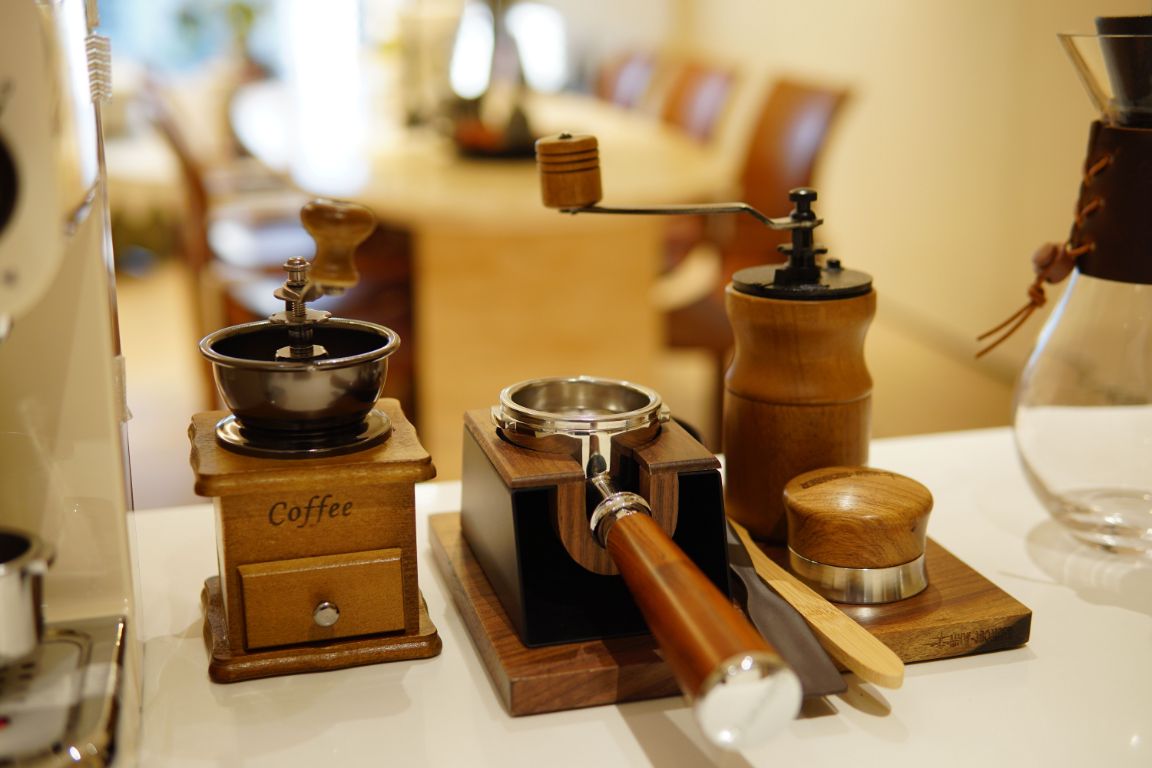
A manual grinder may suit you when:
- You make one or two cups at a time
- You have limited counter space
- Morning noise is a concern
- You travel, camp, or move between locations often
- You enjoy a slower coffee routine
- You want a simple grinder with fewer electrical parts
A good hand grinder can produce excellent results, especially for pour over, AeroPress, French press, and travel coffee. The trade-off is effort. Grinding enough coffee for a full pot or several people can become tiring quickly.
An electric grinder may suit you when:
- You make coffee every day
- More than one person drinks coffee at home
- You usually brew a full carafe
- You want speed before work
- You make espresso and need frequent fine adjustments
- You do not want to manually grind beans every morning
Electric grinders are generally easier for repeat use. But they take up more space, create more noise, and vary widely in how messy they are.
Do not assume electric automatically means better. A compact manual grinder may be a smarter choice than a large electric one when your actual routine is one AeroPress on a quiet morning.
Think honestly about noise
Noise matters more than product pages usually admit.
A grinder that takes only 20 seconds may still be unpleasant in a small apartment early in the morning. This becomes even more important if your kitchen is close to bedrooms, you work unusual hours, or someone in your home is sensitive to noise.
Manual grinders are usually quieter, although they still make a noticeable grinding sound. Electric grinders are faster, but motor noise and vibration can vary a lot by model.
When comparing grinders later, do not only ask whether one is loud. Ask:
- Is it loud enough to wake someone nearby?
- Does it vibrate across a lightweight counter?
- Does it need a large hopper or grounds bin that rattles?
- Will I realistically avoid using it because of the noise?
The best grinder is one you will actually use consistently.
Measure your available counter space
A grinder can look compact in a product photo and still be inconvenient in a real kitchen.
Before buying, measure:
- Counter width
- Cabinet clearance above the grinder
- Space needed to remove the hopper lid
- Room for a scale, brewer, or espresso machine nearby
- Storage space if you plan to put it away after use
Hopper-based grinders often need extra height above them for pouring in beans. A single-dose grinder may need less vertical clearance, but you still need room to add beans and remove the catch cup.
For a small kitchen, a grinder that is easy to store may be more useful than a larger model with features you rarely use.
Choose the right adjustment style
Grinders commonly use stepped or stepless adjustment.
Stepped adjustment
A stepped grinder moves through set positions or clicks.
This is simple and easy to repeat. You can remember that your drip coffee tastes good at one setting and return to it later without guessing.
Stepped grinders work well for many people who make drip coffee, French press, AeroPress, moka pot, or pour over.
Stepless adjustment
A stepless grinder allows more gradual adjustment between marked settings.
This can be useful for espresso because tiny changes can affect shot time and flavor. It also gives experienced users more control, although it may feel less straightforward at first.
You do not need stepless adjustment simply because it sounds advanced. Buy it when you need the extra precision, not because you think every grinder should have it.
Think about how you will use beans
There are two common approaches.
Hopper grinders
A hopper grinder stores beans in a container at the top.
This is convenient when you use the same coffee every day. You can leave beans ready to go and grind what you need each morning.
The downside is flexibility. Switching between decaf and regular coffee, or changing from espresso beans to a lighter roast for pour over, can be less convenient.
Single-dose grinders
A single-dose grinder is designed for you to add only the beans needed for one brew.
This can be helpful when you switch coffees often, make decaf sometimes, or enjoy different brew methods. It can also reduce the amount of ground coffee left inside the grinder between uses.
The trade-off is that it adds one small step to every brew. You need to measure beans first rather than simply pressing a button.
Neither approach is automatically better. Choose the one that matches how often you change beans.
Do not ignore cleanup and retention
Every grinder needs cleaning eventually.
Coffee oils and small particles build up over time. That can affect grind consistency, slow down performance, and make the inside of the grinder smell stale. Baratza notes that routine grinder care supports flavor clarity, grinding speed, and consistency.
Look for a grinder where you can realistically:
- Remove the grounds bin without spilling coffee
- Brush out the burr area
- Access basic parts for cleaning
- Avoid excessive mess from static
- Find replacement parts or support when needed
You do not need a grinder that is effortless to clean. You need one whose maintenance you will not keep postponing.
Espresso needs more from a grinder
This is where many people spend money twice.
A grinder that works well for French press or drip coffee may not give enough fine control for espresso. Espresso requires a narrow grind range, and small changes can affect flow, extraction, and flavor balance.
Before buying a grinder for espresso, check:
- Whether it is genuinely designed for espresso
- How fine the adjustment range goes
- Whether adjustments are easy to repeat
- Whether it suits your basket type and machine
- Whether it can handle your preferred dose size
- Whether you are willing to spend time dialing in shots
You do not need the most expensive espresso grinder to start. But you do need one that gives you enough control to make adjustments without jumping too far between settings.
A simple buying checklist
Choose a grinder based on these priorities:
- Your main brew method
- Whether you need espresso-level precision
- Manual or electric convenience
- Noise in your home
- Available counter and cabinet space
- How often you switch coffees
- How easy it is to clean
- Your realistic budget
Everything else comes after that.
A bigger burr, more settings, a metal body, or a premium-looking design can be nice. But those features are not useful if the grinder is too loud, too large, too complicated, or poorly matched to how you make coffee.
Frequently asked questions
Is a burr grinder really worth it?
For regular home coffee, usually yes. A burr grinder gives you more consistent grounds and better control over grind size than a typical blade grinder. That makes it easier to repeat a brew you enjoy.
What type of grinder is best for drip coffee?
A burr grinder with a useful medium-grind range is usually the best fit for drip coffee. You do not need espresso-level adjustment for a standard drip machine.
Can one grinder work for espresso and pour over?
Yes, but check that it has enough fine adjustment for espresso and enough range for pour over. A grinder advertised as “all-purpose” may still be easier to use for one method than the other.
Should I buy a manual coffee grinder?
Buy a manual grinder when you make smaller amounts of coffee, value quiet operation, have limited space, or want something portable. Choose electric when speed and repeated daily use matter more.
How often should I clean a coffee grinder?
A light cleanout every week or two is a sensible routine for frequent use, while a more thorough burr-area cleaning can happen less often depending on the grinder and how much coffee you make. Always follow the manufacturer’s instructions for your specific model.
The takeaway
A coffee grinder does not need to be complicated.
Choose one that fits the coffee you make most, the space you have, and the routine you can keep up with. For many people, that means a practical burr grinder with a useful grind range, manageable noise, and simple cleanup.
For others, especially espresso drinkers, precision deserves more attention.
Once you know those priorities, product choices become much easier.