A coffee grinder does not need to be expensive to be useful. But the way it grinds coffee can make a noticeable difference in how easy your routine feels and how consistent your cup tastes.
The basic choice is usually between a burr grinder and a blade grinder.
Blade grinders are familiar, affordable, and compact. Many people start with one because it is simple: add beans, hold the button, and stop when the coffee looks roughly right.
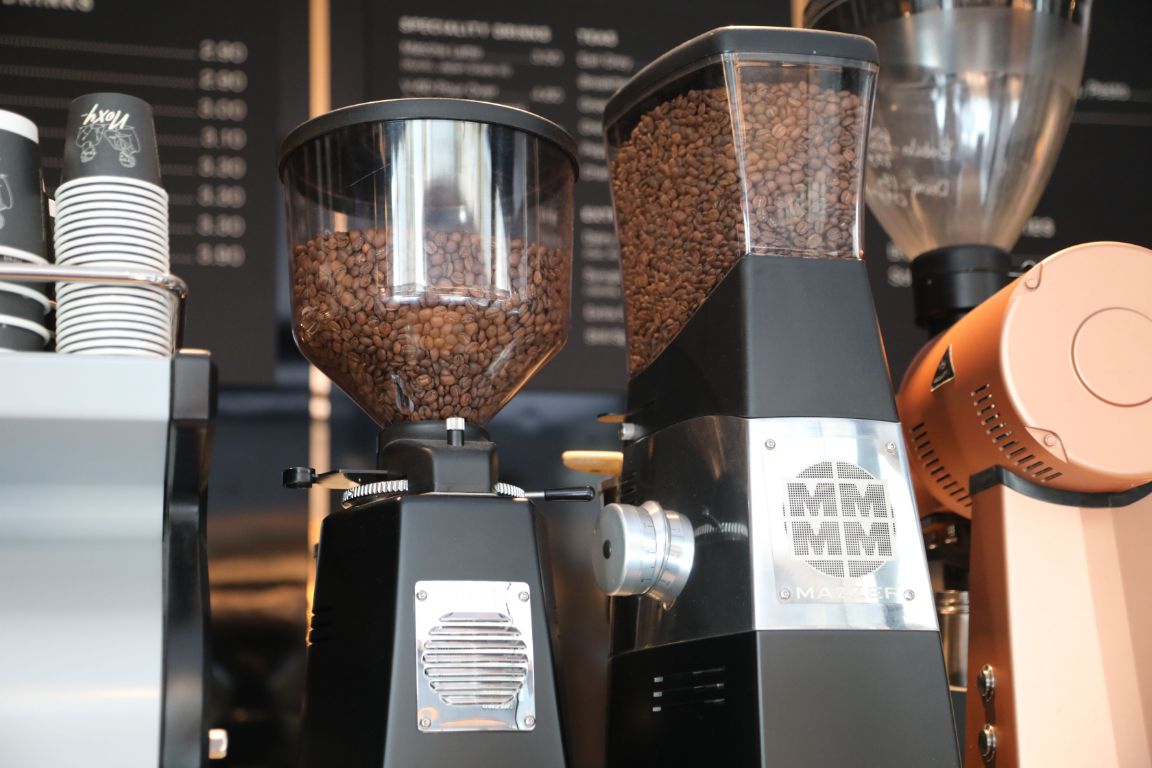
Burr grinders take a different approach. Instead of chopping the beans, they crush them between two burr surfaces and let you choose a more repeatable grind size.
For someone making occasional drip coffee, a blade grinder can be enough. For someone who wants to improve daily coffee, use different brew methods, or make espresso, a burr grinder is usually the more practical long-term choice.
The main difference
A blade grinder uses spinning blades to chop coffee beans.
It does not have a true grind setting. The longer you run it, the finer the coffee becomes. That means you are controlling the result with time, not with a measured adjustment.
A burr grinder uses two burrs set at a chosen distance from one another. Coffee passes between them and comes out closer to a consistent size.
That consistency is the biggest difference.
When coffee grounds are very uneven, some small particles can extract too quickly while larger pieces remain under-extracted. The result can feel confusing: bitter and weak at the same time.
Burr grinders do not make every cup perfect, but they make it easier to repeat a result you enjoyed.
Burr grinder vs blade grinder at a glance
| Feature | Burr grinder | Blade grinder |
|---|---|---|
| Grind consistency | More even | Often mixed |
| Grind-size control | Adjustable settings | Controlled mainly by timing |
| Best for | Regular home coffee, pour over, French press, AeroPress, espresso | Occasional simple drip coffee |
| Espresso suitability | Often yes, depending on model | Usually not ideal |
| Price | Usually higher | Usually lower |
| Noise | Varies by model | Often loud and sharp |
| Cleanup | More parts, but usually manageable | Simple bowl, but can be messy |
| Versatility | Designed mainly for coffee | Often also used for spices and herbs |
Why consistency matters more than people think
Coffee extraction depends on how water moves through the grounds.
If the pieces are broadly similar in size, they tend to extract at a more even pace. If there is a mix of powdery fines and larger chunks, water can pull too much from some pieces and too little from others.
That is why a grinder upgrade can improve coffee even when you keep the same beans and brewer.
The difference may be subtle at first. But over time, people often notice that coffee becomes easier to adjust. When a cup tastes off, they can make one small grind change instead of guessing whether the problem is the beans, the water, or the machine.
For a guide to choosing your starting point, see our Coffee Grind Size Chart.
When a blade grinder is good enough
Blade grinders are not useless.
They can make sense when:
- You drink coffee occasionally.
- You mostly use a standard drip coffee maker.
- You want the lowest upfront cost.
- You have very limited kitchen space.
- You do not mind experimenting a little.
- You also want to grind spices, seeds, or herbs.
A blade grinder can also work as a temporary solution while you decide whether brewing coffee at home is becoming a real habit.
The key is to manage expectations. It will not give you the same control as a burr grinder, but it can still make a drinkable cup.
A simple trick is to use short pulses instead of holding the button continuously. Pause, shake the grinder gently, then pulse again. That helps reduce the gap between large pieces and fine powder.
It is still an approximation, but it is better than running the blades for one long stretch.
When a burr grinder is worth it
A burr grinder is usually worth considering when coffee is part of your daily routine.
It makes the most sense when:
- You want more consistent flavor.
- You switch between different brew methods.
- You use a French press, AeroPress, moka pot, pour-over brewer, or cold brew setup.
- You want to make espresso.
- You buy whole beans regularly.
- You want to repeat a setting that worked well yesterday.
- You are tired of guessing how long to run a blade grinder.
A burr grinder does not need to be large or complicated. Some compact models are designed for everyday drip coffee, while hand grinders can work well for smaller kitchens and travel.
The right choice depends on what you brew most often.
Burr grinders are not all the same
“Burr grinder” is a useful category, but it is not a guarantee that every model will suit every coffee drinker.
Some burr grinders are built for basic drip coffee and French press. Others are designed to handle a much wider range. Espresso-focused grinders generally need finer and more precise adjustment than a grinder meant only for cold brew or filter coffee.
That matters because espresso reacts strongly to small grind changes. A grinder that moves too far between settings can make dialing in a shot frustrating.
For drip coffee, French press, AeroPress, or pour over, you usually do not need that level of precision.
This is why it is better to ask:
“What do I brew most often?”
rather than:
“What is the best grinder?”
What about noise?
Neither type is completely quiet.
Blade grinders tend to make a sharp, high-speed chopping sound. They are fast, but the sound can feel abrupt in a quiet apartment or early in the morning.
Electric burr grinders often create a lower, steadier motor sound. Some are loud; some are more controlled. Their design, burr size, motor, body material, and how much vibration reaches the counter can all affect the experience.
Manual burr grinders are usually the quietest option. They still make noise, but it is less likely to wake someone in the next room.
For a household with sleeping children, thin apartment walls, or early work hours, noise can matter more than a long feature list.
What about cleanup?
Blade grinders are simple to wipe out, but coffee dust can stick around the edges of the bowl. Because the same appliance may also be used for spices, it is worth thinking about whether you want your morning coffee near yesterday’s cumin or pepper.
Burr grinders usually need a little more attention. Grounds can collect around the burrs, chute, or catch cup over time.
The best routine is not complicated:
- Empty loose grounds after use.
- Brush out the catch cup and visible coffee dust regularly.
- Follow the manufacturer’s instructions before removing burrs.
- Give the grinder a deeper clean when coffee starts to seem stale, messy, or inconsistent.
Some modern burr grinders use removable burrs or simple access points specifically to make routine cleaning easier.
Can a blade grinder make espresso?
It can make fine coffee grounds, but that is not the same as being suitable for espresso.
Espresso needs a very narrow grind range and small adjustments between settings. A blade grinder does not give you that control consistently.
You may occasionally get a shot that works, but it will be difficult to repeat. One batch may run too quickly and taste thin; the next may choke the machine or taste overly bitter.
For people who plan to make espresso regularly, a grinder designed with enough fine adjustment is one of the most useful upgrades they can make. Espresso-oriented burr grinders commonly separate their fine espresso range from coarser filter settings for this reason.
A practical decision guide
Choose a blade grinder when:
- You make coffee only occasionally.
- You want the lowest possible entry cost.
- You mainly use a simple drip coffee maker.
- You have almost no storage space.
- You want one tool for coffee and spices.
- You do not mind less consistency.
Choose a burr grinder when:
- You make coffee most days.
- You want better control over taste.
- You use more than one brew method.
- You care about repeatable results.
- You make pour over, AeroPress, French press, moka pot, or cold brew.
- You are moving toward espresso.
- You want a grinder that can become part of a long-term coffee routine.
Frequently asked questions
Is a burr grinder always better than a blade grinder?
For coffee consistency and grind-size control, usually yes. But “better” should still match your needs. A blade grinder can be enough for occasional use, while a burr grinder becomes more worthwhile when coffee is part of your daily routine.
Is a blade grinder bad for coffee?
Not necessarily. It can make a decent cup, especially for basic drip coffee. Its main limitation is that it gives you less consistent grounds and less control over the final result.
Can I use a burr grinder for spices?
Usually, no. Many burr grinders are intended only for coffee beans. Check the manufacturer’s instructions before using one for anything else. Some blade grinders are specifically designed to handle coffee, spices, nuts, and dry herbs.
Do I need a burr grinder for French press?
You do not need one, but it can make French press easier to dial in. A consistent coarse grind can help reduce excessive muddiness and make the brew more repeatable.
Is a manual burr grinder better than an electric blade grinder?
For grind consistency, often yes. For speed and convenience, not always. A manual burr grinder can be excellent for one or two cups, but an electric option may be more realistic for a busy household.
The takeaway
A blade grinder is an easy way to start grinding coffee at home.
A burr grinder is usually the better choice when you want more control, more consistency, and a routine that grows with you.
Do not buy a burr grinder simply because coffee people say you should. Buy one when you are ready to make coffee more often, use whole beans regularly, or stop relying on guesswork every morning.