Choose a moka pot when you want a small amount of concentrated coffee with enough intensity for a modest milk drink.
Choose a French press when you want one or more full mugs with a heavier texture, a relaxed brewing process, and more control over the amount you make.
Both brewers use metal filtration, so neither produces the especially clean cup associated with a paper filter. But they are not interchangeable. A moka pot makes a short, concentrated stovetop brew, while a French press makes a larger immersion-brewed coffee.
Moka pot vs French press at a glance
| Feature | Moka pot | French press |
|---|---|---|
| Coffee style | Small, concentrated and intense | Larger, rich and full-bodied |
| Brewing method | Heated water moves through coffee under pressure | Coffee steeps directly in water |
| Typical grind | Medium to medium-fine, coarser than espresso | Coarse |
| Serving size | Several small servings based on pot size | One or several regular cups |
| Heat source | Compatible stove or hot plate | Kettle or another source of hot water |
| Brew control | Mainly grind, heat and coffee choice | Ratio, temperature, grind and steep time |
| Filters needed | No disposable filter | No disposable filter |
| Sediment | Some fines may reach the cup | Usually more noticeable |
| Cleanup | Several metal parts and a wet basket | Loose wet grounds in the carafe |
| Best for milk | Better for concentrated milk-drink bases | Better for coffee with a splash of milk |
| Best for groups | Small shared servings | Full mugs for several people |
| True espresso | No | No |
The brewers work in completely different ways
The moka pot is a pressure-driven stovetop brewer.
Water sits in the lower chamber, ground coffee fills a metal basket above it, and brewed coffee collects in the upper chamber. As the brewer heats, rising pressure moves the water through the coffee.
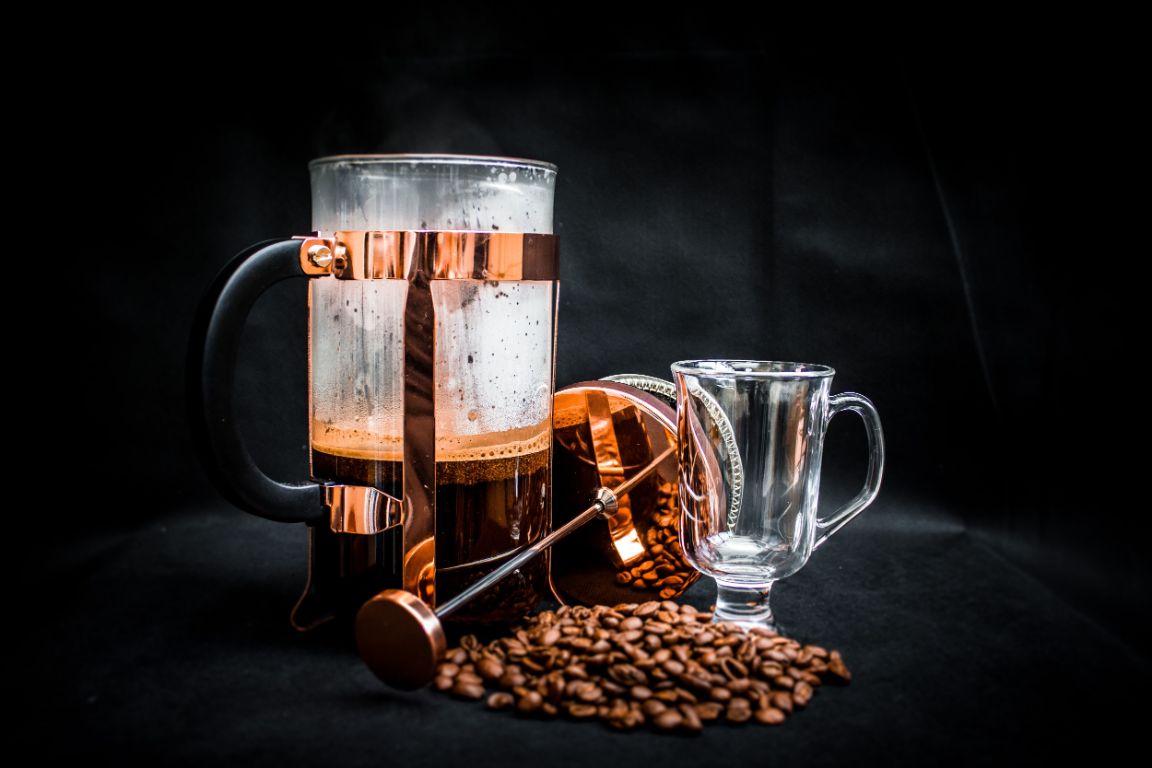
A French press is an immersion brewer.
Ground coffee and hot water remain in direct contact inside the carafe. After several minutes, a mesh plunger separates most of the grounds from the liquid.
This difference affects nearly every part of the experience:
- how concentrated the coffee is
- how much you can make
- which grind size works
- how much control you have
- how closely you need to watch the brewer
- how the cleanup feels
How moka pot coffee tastes
Moka coffee is concentrated rather than mug-sized.
It usually has a heavier texture and stronger perceived intensity than standard filter coffee. The metal filter allows coffee oils and some fine particles into the cup, while the fixed basket and boiler produce a relatively small serving.
A moka pot works especially well when you enjoy:
- a short, intense coffee
- coffee diluted with hot water
- iced coffee with milk
- a small homemade latte
- chocolatey, nutty or deeper roasted flavors
- a consistent stovetop ritual
Its main limitation is that mistakes can become very noticeable.
Coffee may taste harsh when the grind is too fine, the basket is compressed, or the brewer remains over high heat for too long. Bialetti recommends using medium-ground coffee that is coarser than espresso, filling the basket without pressing it down, and brewing over low heat.
Moka coffee should not automatically taste burnt or bitter. Those flavors are often signs that the setup needs adjustment.
How French press coffee tastes
French press coffee is usually rich and textured, but much less concentrated than moka coffee.
Because the metal mesh does not catch every fine particle, the cup may have:
- a heavier mouthfeel
- more visible oils
- some sediment near the bottom
- a softer separation between individual flavor notes
- a fuller impression than paper-filtered coffee
The result depends heavily on the beans and recipe. French press can bring out chocolate and caramel notes, but it can also work with lighter, fruitier coffees when the grind, ratio and water are well matched.
The brewer is flexible because you choose the amount of coffee and water. A common filter-coffee starting point is 60 grams of coffee per liter of water, equivalent to roughly a 1:16.7 coffee-to-water ratio.
That flexibility makes French press more useful when you sometimes brew one mug and sometimes serve several people.
Which one makes stronger coffee?
A moka pot normally makes the more concentrated drink.
That does not automatically mean every moka serving contains more caffeine than every French press serving. Total caffeine depends partly on the beans, coffee dose, extraction and how much of the finished drink you consume.
The practical difference is easier to understand through volume:
- A moka pot places its coffee into a small output.
- A French press spreads its coffee across a larger amount of water.
Moka coffee will generally hold up better when mixed with milk because the coffee starts more concentrated.
French press produces a full mug that usually needs little or no dilution. It works well black or with a modest splash of milk, but adding a large amount of milk can make it taste weak unless you begin with a stronger recipe.
Neither one makes conventional espresso
Moka pots are commonly described as stovetop espresso makers, but the coffee is not the same as a shot from an espresso machine.
A moka pot creates enough pressure to push water through the basket, but it does not normally produce the pressure, crema or dense texture associated with conventional espresso.
A French press is even further from espresso. It produces full-strength brewed coffee through immersion, without forcing water rapidly through a compact puck.
Choose a moka pot when you want espresso-style concentration without an espresso machine.
Choose a French press when you want a rich regular coffee rather than an espresso substitute.
Practical starting recipes
These recipes create a fair starting point. Roast level, bean density, grinder performance and personal taste may require small adjustments.
Three-cup moka pot starting point
| Setting | Starting point |
|---|---|
| Pot | Three-cup moka pot |
| Water | Room-temperature water, no higher than the safety valve |
| Coffee | Fill the basket evenly to the edge |
| Grind | Medium to medium-fine, but coarser than espresso |
| Tamping | Do not tamp or compress |
| Heat | Low |
| Brew end | Remove from heat when the collector fills and prolonged sputtering is about to begin |
| Expected result | About 4.4 ounces of concentrated coffee |
Bialetti lists its three-cup Moka Express at approximately 4.4 ounces in total. The “three cups” are small moka servings, not three household mugs.
The coffee dose depends on the basket, beans and grind. Fill the basket level rather than trying to force an unrelated gram measurement into a fixed-size brewer.
French press starting point
| Setting | Starting point |
|---|---|
| Coffee | 30 grams |
| Water | 500 grams |
| Ratio | About 1:16.7 |
| Grind | Coarse |
| Temperature | 198–205°F / 92–96°C |
| Steep time | 4 minutes |
| Press | Lower the plunger slowly |
| Expected result | About two moderate mugs with a rich, full texture |
Bodum’s French press guidance uses coarse coffee, water around 92–96°C and a four-minute brew before slowly lowering the plunger.
Do not leave all the finished coffee sitting on the grounds for an extended period. Pour what you are not drinking immediately into a separate carafe.
Which brewer is easier to learn?
French press has the simpler learning curve.
The basic routine is straightforward:
- Add coarse coffee.
- Pour in measured hot water.
- Stir gently.
- Wait four minutes.
- Press slowly.
- Pour.
You do not need to judge stove heat or watch coffee rise into a separate chamber.
Moka brewing has fewer measurements, but it requires more attention during heating. You need to use the correct pot size, fill the basket properly, manage the heat, and recognize when the brew is ending.
For a beginner who wants a forgiving first brewer, French press is usually easier.
For someone who already knows they want concentrated coffee, learning the moka routine is worthwhile.
Which is easier to repeat consistently?
The answer depends on what kind of control you prefer.
French press offers adjustable control
You can easily change:
- coffee dose
- water amount
- brew ratio
- grind size
- water temperature
- steep time
That makes troubleshooting easier. When the coffee is too weak, you can use more coffee, grind slightly finer or increase the steep time.
When it is too heavy or bitter, you can grind coarser, shorten the brew, or use more water.
The disadvantage is that careless measuring can make each batch different.
Moka pots use a fixed brewing structure
The boiler and basket largely determine how much water and coffee you use.
That reduces daily measuring, but it also gives you less flexibility. Most adjustments happen through:
- coffee selection
- grind size
- heat level
- when you remove the brewer from the stove
The pot can become highly repeatable once those variables are settled.
However, changing from a small serving to a large one usually requires a different moka-pot size rather than simply half-filling or overfilling the same brewer.
How to tell whether your moka brew worked
A good moka brew should enter the upper chamber in a relatively smooth flow.
As the brew reaches its final stage, the flow becomes lighter and the brewer begins to gurgle. Bialetti instructs users to turn off the stove once the coffee has risen into the collector.
CoffeeInTown’s practical recommendation is to remove the pot before it spends a long time sputtering aggressively.
When moka coffee tastes harsh
Try:
- lowering the stove heat
- using a slightly coarser grind
- removing the pot sooner
- checking that the basket was not tamped
- trying a less darkly roasted coffee
- cleaning the filter plate and basket
When the moka pot brews very slowly
Check whether:
- the grind is too fine
- the basket is overfilled
- coffee has been pressed down
- the filter is blocked
- the gasket is worn or incorrectly positioned
- the heat is too low to begin the brew
Never cover or interfere with the safety valve.
How to tell whether your French press worked
The plunger should lower with steady, moderate resistance.
The coffee should taste full and rich without feeling sharply bitter or overwhelmingly gritty.
A small amount of sediment is normal. A thick layer of sludge suggests the grind may be too fine or uneven.
When French press coffee tastes weak
Try:
- using more coffee
- grinding slightly finer
- extending the steep by 30–60 seconds
- checking that all grounds were fully wet
- using fresher coffee
When it tastes bitter or muddy
Try:
- using a coarser grind
- shortening the steep
- lowering the water temperature slightly
- pressing more gently
- pouring the finished coffee immediately
- cleaning the mesh filter thoroughly
Do not force a plunger that feels unusually difficult. A very fine grind can clog the mesh and create too much resistance.
Serving size is one of the biggest differences
Moka-pot and French press size labels can both be misleading.
Bialetti describes moka servings in small espresso-style portions. Its three-cup model produces about 4.4 ounces total, while its six-cup model produces about 9.1 ounces.
French press manufacturers may also count “cups” as smaller than a standard mug. Bodum states that one French press cup is about four ounces, which is why a model described as eight cups may hold around 34 ounces.
Always check the stated ounce or milliliter capacity.
For practical planning:
- Three-cup moka pot: one concentrated serving or two small portions
- Six-cup moka pot: one large concentrated serving or several small portions
- 17-ounce French press: about one large mug or two smaller servings
- 34-ounce French press: several normal cups, depending on mug size
Do not choose based only on the number of “cups” in the product name.
Which is better for milk drinks?
The moka pot is usually the better choice.
Its concentrated output can remain noticeable after adding warm or frothed milk. A three-cup pot can create a base for one modest milk drink or two smaller ones.
It works well for:
- homemade café au lait
- iced coffee with milk
- cappuccino-inspired drinks
- strong coffee with steamed or heated milk
A French press can make rich coffee, but it is closer to normal brewed-coffee strength. It works better with a small amount of milk than with a large latte-style serving.
A French press can also froth heated milk by moving the plunger up and down, but that should be done in a separate clean press with enough empty space to prevent overflow.
Neither brewer heats or steams milk on its own.
Which is better for black coffee?
French press is usually the more natural choice for a full black coffee.
It gives you a complete mug without requiring dilution. You can adjust the ratio and serving size while keeping the same basic workflow.
Moka coffee can also be enjoyed black, but the concentrated serving may feel intense. Many people dilute it with hot water to create a longer drink.
Choose based on the experience you prefer:
- Moka pot: small, intense and concentrated
- French press: larger, slower and more sippable
Which is faster?
The French press needs about four minutes of steeping after the water is ready.
A moka pot must heat its own water on the stove. Brewing time varies with pot size, water temperature, burner and material. It also requires attention near the end of the process.
In practice:
- French press gives you a predictable waiting period.
- Moka brewing may finish quickly, but you need to watch it.
- French press coffee can be served immediately after plunging.
- A moka pot remains hot and must cool before it can be disassembled.
Neither is slow, but the French press is easier to fit around another morning task because the steep time is predictable.
Cleanup: choose your kind of inconvenience
Neither brewer has perfectly effortless cleanup.
Cleaning a moka pot
Once the brewer is cool:
- Unscrew the chambers.
- Remove the funnel basket.
- Dispose of the wet coffee puck.
- Rinse all parts.
- Let them dry before reassembly.
For the classic aluminum Moka Express, Bialetti advises rinsing with warm water and avoiding soap and the dishwasher. Care guidance can differ for stainless-steel models and other brands, so follow the instructions supplied with your pot.
You should also inspect the gasket, filter plate and safety valve periodically.
Cleaning a French press
After pouring:
- Scoop or strain out the loose grounds.
- Avoid washing a large mass of grounds down the sink.
- Rinse the carafe.
- Clean the mesh plunger.
- Occasionally disassemble the filter pieces for a deeper wash.
Bodum recommends washing its press with warm, soapy water after use, though exact dishwasher guidance depends on the model.
French press cleanup is not technically difficult. It is simply messier because the grounds remain loose in the bottom rather than forming a compact basket.
Counter space, travel and durability
Both brewers are compact and require no built-in electronics.
Moka pot
A moka pot is practical when you have:
- a gas or electric stove
- a camping burner
- a compatible hot plate
- an induction-compatible model or adapter
The classic aluminum Moka Express needs an adapter for induction cooking.
Metal moka pots travel well, but you still need an appropriate heat source.
French press
A French press only needs hot water, making it useful in:
- offices
- hotel rooms with kettles
- shared kitchens
- cabins
- camping setups
- small apartments
Glass French presses require more careful packing. Stainless-steel or durable plastic versions are better suited to travel.
For travel where only a kettle is available, French press is more practical. For camping with a stove, either can work.
Common mistakes when comparing them
Assuming both make the same “strong” coffee
Moka coffee is concentrated. French press coffee is full-bodied but normally brewed at regular mug strength.
Treating moka cups as normal mugs
A three-cup moka pot makes about 4.4 ounces total, not three large servings.
Ignoring French press capacity labels
French press “cups” may also be only four ounces. Check the real capacity before buying.
Tamping moka-pot coffee
Do not compress the basket. The water needs to pass through the grounds without the resistance required for espresso.
Using the same grind for both
Moka coffee needs a noticeably finer grind than French press coffee.
See our Coffee Grind Size Chart for a practical visual reference.
Leaving French press coffee on the grounds
Pressing does not remove the brewed coffee from the grounds completely. Pour the finished batch rather than leaving it in the press for a long time.
Choosing by price alone
Both brewer types are available at modest prices. The more important differences are capacity, heat source, coffee style and cleanup.
Choose a moka pot when…
A moka pot fits you better when:
- you prefer small, intense coffee
- you regularly add milk
- you want a consistent fixed batch
- you have a compatible stove
- you enjoy a hands-on stovetop routine
- you do not want to buy paper filters
- you have limited counter space
- you are comfortable monitoring the brew
- you understand that moka sizing uses small servings
Choose a French press when…
A French press fits you better when:
- you want one or more regular mugs
- you enjoy rich, full-bodied black coffee
- you want a simple beginner method
- you need to adjust serving size
- you brew for several people
- you have access to a kettle but not a stove
- you do not mind some sediment
- you prefer a predictable four-minute steep
- you are willing to handle loose wet grounds
Is it useful to own both?
Yes, because they solve different problems.
A moka pot can handle concentrated morning coffee and small milk drinks. A French press can cover larger black coffees, shared breakfasts and several servings in one batch.
A practical two-brewer routine might look like:
- Moka pot: quick concentrated coffee on weekdays
- French press: larger weekend batches or coffee for guests
Owning both is unnecessary when you always drink the same style.
Someone who only wants full black mugs may rarely use a moka pot. Someone who always makes a small coffee with milk may find a French press too large and too diluted for the job.
Frequently asked questions
Is moka pot coffee stronger than French press?
Moka coffee is normally more concentrated and may taste more intense. French press makes a larger drink at a more typical brewed-coffee ratio.
Which brewer makes more coffee?
French press usually makes more in one batch. Moka output depends on the pot size, and its cup labels refer to small servings.
Which is better for beginners?
French press is easier to learn because it does not require stove and heat management. Moka brewing is still approachable but demands more attention near the end.
Which has more sediment?
French press generally allows more fine sediment into the cup. Moka coffee can also contain fines, especially when the grind is too fine.
Can I use pre-ground coffee?
Yes. Use coffee ground for the specific method. French press needs a coarse grind, while moka requires a finer grind that is still coarser than espresso.
Which is better for travel?
French press is more convenient when only a kettle is available. Moka pots travel well but require a compatible stove or hot plate.
Which is easier to clean?
Moka grounds stay inside a removable basket, but the brewer has several parts and must cool first. French press has fewer brewing parts but leaves loose wet grounds in the carafe.
Can either replace an espresso machine?
A moka pot can provide concentrated espresso-style coffee, but neither brewer reproduces conventional espresso pressure, crema or texture.
The takeaway
Choose a moka pot for concentrated stovetop coffee, modest milk drinks and small fixed servings.
Choose a French press for full mugs, flexible batch sizes and a simpler immersion-brewing routine.
Neither brewer is universally better. One concentrates coffee into a small cup; the other gives you a larger, textured drink. The right choice is the one that matches how much coffee you make, how you take it, and which cleanup you are more willing to handle.