Running out of ground coffee is one of those small morning problems that can feel bigger than it is.
Maybe your grinder stopped working. Maybe you bought whole beans before buying the rest of your setup. Maybe you are staying somewhere with a French press but no grinder in sight.
You can still make coffee.
The result may not be as even as coffee ground with a proper burr grinder, but a few common kitchen tools can get beans into a usable state. The important thing is to choose a method that matches the coffee you are making, work in small batches, and avoid turning part of the coffee into dust while leaving the rest in large chunks.
The short answer
The most practical options are:
- A rolling pin for a coarse to medium grind
- A mortar and pestle for more control
- A food processor for larger batches
- A blender for a quick medium grind
- A hammer or heavy pan as a last resort
None of these will replace a good grinder for espresso. But they can make enough coffee for drip brewing, French press, AeroPress, pour over, or cold brew when needed.
First, decide what grind you need
Do not start crushing beans until you know what you are brewing.
A rough guide:
| Brew method | Grind goal |
|---|---|
| Cold brew | Coarse |
| French press | Coarse |
| Drip coffee maker | Medium |
| Pour over | Medium |
| AeroPress | Medium-fine |
| Moka pot | Fine |
| Espresso | Very fine |
Without a grinder, it is usually easiest to aim for coarse or medium coffee. Fine espresso-style grounds are difficult to make evenly with kitchen tools, and uneven grounds can make espresso frustrating.
For a more detailed starting point, see our Coffee Grind Size Chart.
Method 1: Use a rolling pin
A rolling pin is one of the easiest methods for making coarse or medium coffee grounds.
It works best for French press, cold brew, and simple drip coffee.
What you need
- Whole coffee beans
- A strong zip-top bag
- A rolling pin
- A flat work surface
How to do it
- Put a small amount of coffee beans into a sturdy zip-top bag.
- Press out most of the air and seal the bag.
- Lay the bag flat on a towel or cutting board.
- Gently tap the beans first to break them apart.
- Roll over the bag with steady pressure.
- Pause occasionally and move larger pieces toward the center.
- Stop when the coffee looks close to the texture you need.
Do not overfill the bag. A thin layer of beans is much easier to crush evenly than a thick pile.
Best for
- French press
- Cold brew
- Drip coffee
- Travel or temporary setups
What to expect
The grind will not be perfectly even. That is fine for a one-off brew. Try to avoid creating too much powder, especially for French press, where very fine coffee can lead to extra sediment.
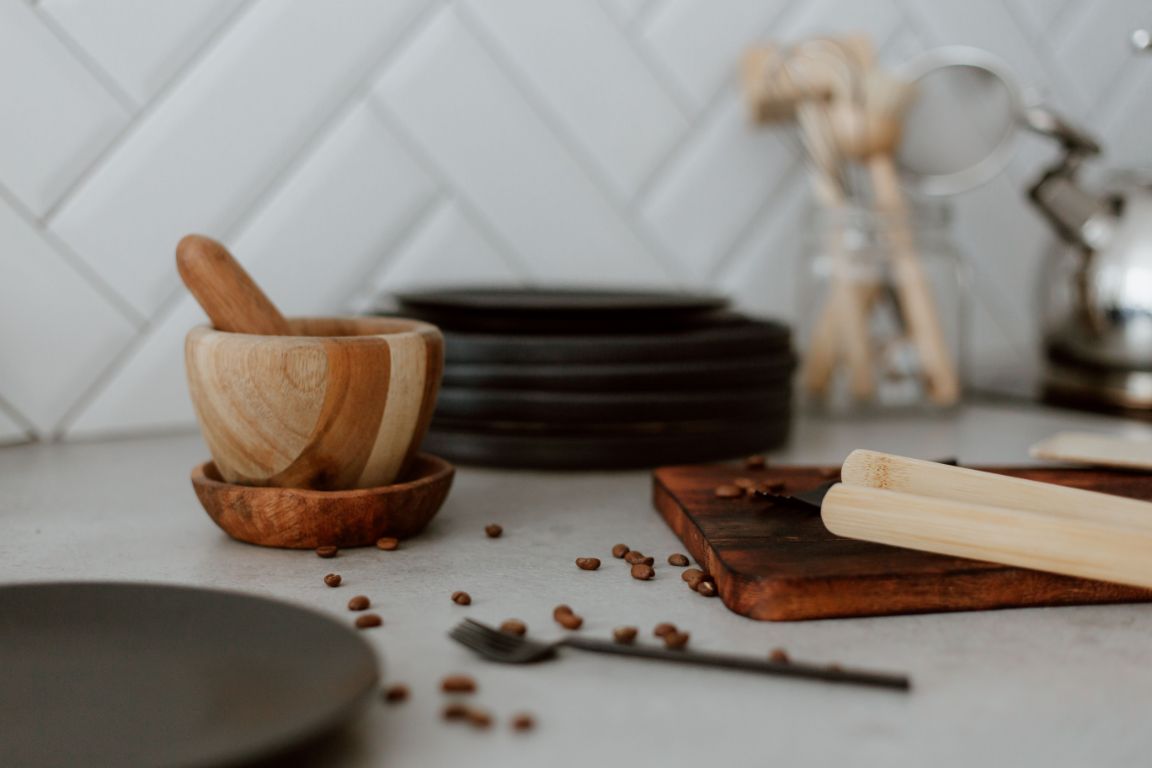
Method 2: Use a mortar and pestle
A mortar and pestle gives you more control than a rolling pin, especially when you only need enough coffee for one or two cups.
It takes a little patience, but it is one of the better no-grinder methods when you want to adjust the texture as you go.
How to do it
- Add a small amount of beans to the mortar.
- Press and twist with the pestle to crack the beans.
- Continue crushing in small circles.
- Check the texture every few seconds.
- Remove the grounds once they are close to your target size.
Work in batches rather than trying to grind enough coffee for a full pot at once.
Best for
- AeroPress
- Pour over
- Moka pot
- One or two cups of coffee
What to expect
You can get a reasonably useful medium or medium-fine grind this way, but it still takes time. It is not ideal for a rushed weekday morning unless you are making a small amount.
Method 3: Use a food processor
A food processor can handle more beans at once, which makes it useful when you are brewing for several people.
The downside is consistency. It can quickly create a mix of larger pieces and fine dust, especially if you run it continuously.
How to do it
- Add only enough beans to cover the bottom of the processor bowl lightly.
- Use short pulses rather than holding the button down.
- Shake or tap the bowl between pulses so the beans move around.
- Check the texture often.
- Stop when most of the coffee is close to medium or coarse.
Best for
- Drip coffee makers
- Cold brew
- French press
- Larger batches
What to expect
A food processor is useful in an emergency, but it is not the best choice for precise brewing. Avoid using it for espresso or any method where small grind changes matter a lot.
Method 4: Use a blender
A blender can work in a similar way to a food processor, but it is usually better for small batches.
Use a pulse setting if your blender has one. Running it continuously can turn some beans into powder while leaving others nearly whole.
How to do it
- Add a small amount of beans.
- Pulse for one or two seconds at a time.
- Stop and shake the blender gently between pulses.
- Check the texture often.
- Stop before the grounds become too fine.
Best for
- Drip coffee
- AeroPress
- Quick travel or temporary setups
What to expect
A blender can get coffee into a usable range, but it is not especially consistent. Think of it as a practical backup, not a replacement for a grinder.
Method 5: Use a heavy pan or kitchen mallet
This is the least precise option, but it can work when you have almost nothing else available.
Place the beans in a thick zip-top bag, cover it with a towel, then gently crush them using a heavy pan, mallet, or similar flat object.
Use controlled pressure. Do not hit the beans aggressively. You want to break them gradually rather than split the bag or scatter coffee around the kitchen.
Best for
- Cold brew
- French press
- Camping or basic travel situations
What to expect
This method makes a coarse, uneven grind. It is enough for a forgiving brew method, but it will not give you much control.
Which method is best?
For most people:
- Rolling pin: best all-around emergency option
- Mortar and pestle: best for small batches and more control
- Food processor: best for larger batches
- Blender: useful for a quick medium grind
- Heavy pan or mallet: only when nothing else is available
The best answer depends on what you are brewing and how much coffee you need.
A rolling pin may be more useful than a blender when you are making French press. A mortar and pestle may be more useful than a food processor when you are brewing one AeroPress.
What not to do
A few mistakes can make a temporary solution worse than it needs to be.
Do not grind too much at once
Large batches are harder to crush evenly. Work with only enough beans for the coffee you are about to make.
Do not use wet tools
Coffee beans and moisture do not mix well. Make sure your blender, food processor, mortar, or other tool is completely dry before you start.
Do not aim for espresso with kitchen tools
Espresso needs a very fine, consistent grind. A blender or rolling pin may produce some powder, but it will not give you the repeatable control espresso requires.
Do not use tools with strong food odors
Coffee picks up aromas easily. A spice grinder, food processor, or mortar that smells strongly of garlic, chili, cumin, or pepper can affect the coffee.
Do not keep pre-crushed coffee for long
Once beans are broken up, they lose aroma faster. Grind only what you need, then brew it soon after.
Can you make good coffee without a grinder?
Yes, especially if you choose a forgiving brew method.
French press, cold brew, and simple drip coffee are generally easier to manage with uneven grounds than espresso. A paper filter can also help catch some of the extra fine particles created by improvised grinding methods.
The coffee may not be as clean or repeatable as it would be with a burr grinder. But it can still be enjoyable.
The goal is not perfection. It is getting a decent cup without wasting good beans.
When it is time to buy a grinder
Improvised methods are useful once in a while. They become frustrating when you use them regularly.
A grinder is worth adding to your setup when:
- You buy whole beans often
- You want more repeatable coffee
- You switch between brew methods
- You want to make espresso
- You are tired of uneven grounds and messy kitchen tools
- You want to grind only what you need each morning
A simple burr grinder does not have to be expensive or large to make your routine easier.
Read our guide on How to Choose a Coffee Grinder for help deciding what type makes sense for your setup.
Frequently asked questions
Can I use a blender to grind coffee beans?
Yes, for a small batch and a temporary solution. Use short pulses and stop often to check the texture. It works best for medium or coarse coffee, not espresso.
Can I crush coffee beans with a rolling pin?
Yes. A rolling pin is one of the better no-grinder options for coarse or medium coffee. Use a strong sealed bag, work in small batches, and roll slowly.
Can I use a food processor for coffee beans?
Yes, especially for larger batches. Use short pulses instead of running it continuously, since continuous blending can make the grind uneven.
What is the easiest coffee to make without a grinder?
French press, cold brew, and standard drip coffee are usually the most forgiving choices because they do not require highly precise grind sizes.
Can I make espresso without a grinder?
You can make espresso with pre-ground espresso coffee. But if you only have whole beans and no grinder, improvised kitchen tools are unlikely to create the consistency needed for reliable espresso.
The takeaway
A proper coffee grinder is useful, but it is not the only way to make coffee.
A rolling pin, mortar and pestle, food processor, or blender can get you through a missed morning or a temporary setup. Work in small batches, match the texture to your brew method, and do not expect espresso-level precision.
Then, when whole-bean coffee becomes part of your regular routine, a good grinder becomes one of the most practical upgrades you can make.