
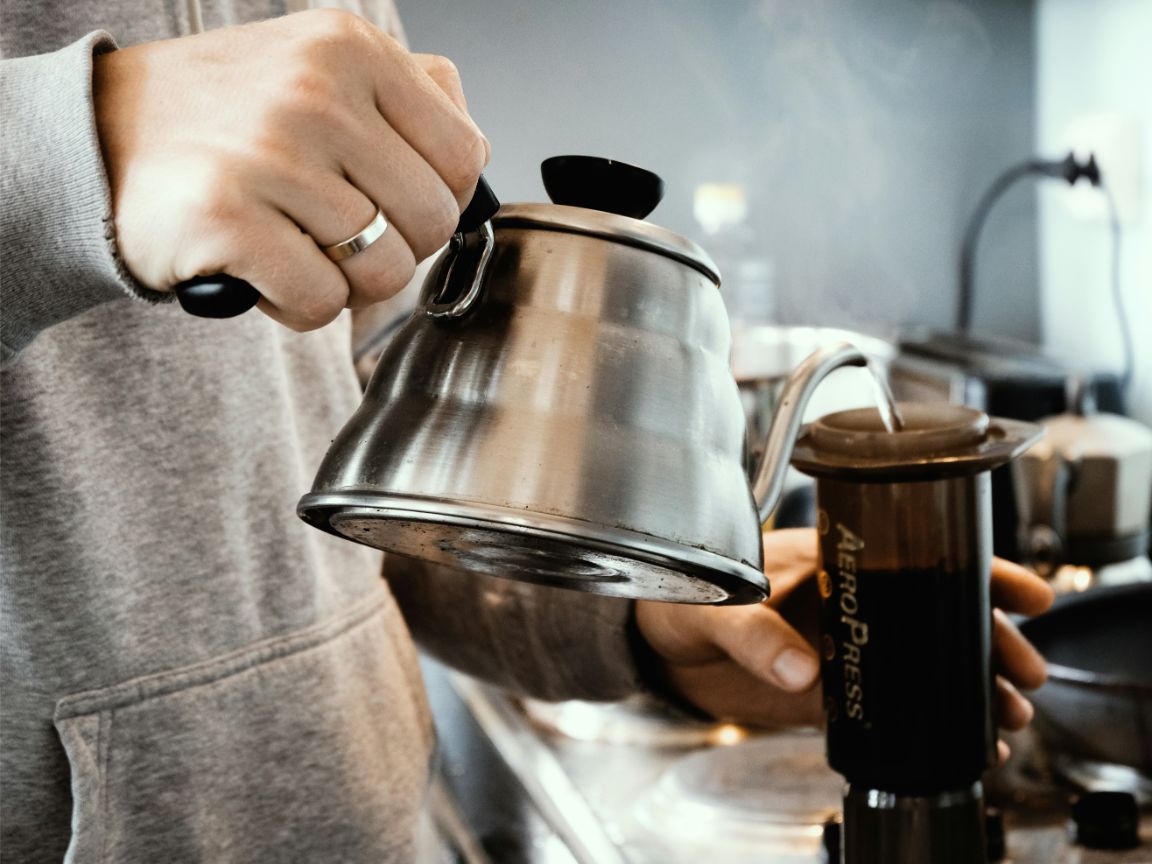
The inverted AeroPress method places the brewer upside down while the coffee steeps. People use it to stop water from dripping through the filter before they are ready to press.
However, AeroPress discourages this method because the upside-down brewer is less stable and can tip while holding hot water.
For most home brewers, the safer choice is to use the standard upright method and control early drip-through by:
- inserting the plunger slightly to create a seal
- using a compatible flow-control filter cap
- grinding slightly finer
- pouring more gently
- choosing a recipe designed for the standard position
The inverted method can work, and it has appeared in coffee competition recipes, but it is not necessary for making balanced AeroPress coffee.
Inverted AeroPress at a Glance
| Question | Practical answer |
|---|---|
| What is it? | Brewing with the AeroPress chamber upside down |
| Why use it? | To prevent early drip-through and allow unrestricted steeping |
| Does it improve every cup? | No. It mainly changes workflow and steep control |
| Is it officially recommended? | No. The upside-down brewer is less stable |
| Does it require a special grind? | No. Grind size depends on the full recipe |
| Is it necessary for long steeps? | No. A plunger seal or flow-control cap can provide similar control |
| Best alternative | Standard upright brewing with the plunger inserted slightly |
| Expected result | Depends on dose, ratio, grind, temperature, steep time, and filter |
What Is the Inverted AeroPress Method?
In standard AeroPress brewing, the filter cap is attached to the bottom of the chamber, which sits on a sturdy mug. Water is poured into the upright brewer, and some liquid may begin dripping through before the plunger is inserted.
With the inverted method, the plunger is partially inserted into the chamber first. The brewer is then turned upside down so the open chamber faces upward and the plunger acts as its temporary base.
Coffee and water are added from the open end. After steeping, the filter cap is attached and the entire brewer must be flipped onto a mug before pressing.
That final flip creates the main safety concern. The chamber contains hot liquid, while the connection between the chamber and partially inserted plunger supports the brewer in an unstable position.
Why Do People Use the Inverted Method?
The main reason is to prevent premature drip-through.
People commonly use the inverted method when they want:
- complete control over steep time
- less liquid escaping before pressing
- longer immersion
- coarser grind recipes
- concentrated brews that are diluted afterward
It creates full immersion
When the AeroPress is inverted, there is no filter opening beneath the coffee during the steep. All the water remains with the grounds until the brewer is flipped and pressed.
It can simplify long-steep recipes
With the standard method, a long steep may allow more water to drip into the mug unless the plunger creates a good seal.
The inverted method prevents that because there is no outlet beneath the coffee while it brews.
It became popular through enthusiast recipes
Some coffee competition recipes have used the inverted position, especially methods built around concentrated brewing, coarse grinds, longer steeps, vigorous stirring, and later dilution.
Those recipes show what the brewer can do, but they are not automatically the safest or most practical approach for an ordinary morning.
Why the Inverted Method Is Riskier
The upside-down brewer is less stable and more prone to tipping. The risk comes from several parts of the workflow.
The plunger becomes the base
In standard brewing, the wide chamber sits on a mug.
In inverted brewing, the partially inserted plunger supports the chamber. The footprint is smaller, and the brewer is easier to knock or tip.
Hot water is added before the filter cap
The top remains open while coffee and water are added. A bump, unstable counter, or poorly inserted plunger can spill the contents.
The brewer must be flipped
The filter cap must be attached while the brewer holds hot coffee. Then the brewer is turned over and placed on a mug.
A loose cap, wet grip, unstable mug, or hurried movement can cause a spill.
Overfilling leaves little room for control
The closer the liquid is to the open rim, the more difficult it becomes to attach the filter cap and flip the brewer safely.
For these reasons, CoffeeInTown does not recommend the inverted method as the default beginner recipe.
Does Inverted Brewing Taste Better?
Not automatically.
The inverted method changes how the coffee and water remain together before pressing. It does not independently determine whether the cup tastes good.
Flavor still depends on:
- coffee dose
- water amount
- brew ratio
- grind size
- water temperature
- steep time
- agitation
- filter material
- pressing speed
- bean freshness
- roast level
Two recipes using the inverted position can taste completely different. An upright recipe can also produce the same general style of cup when early drip-through is controlled.
The most useful way to think about inversion is this: it is a workflow for retaining brewing water, not a guarantee of stronger, smoother, or better coffee.
There Is No Single Inverted AeroPress Recipe
Inverted recipes vary widely.
| Variable | Common possibilities |
|---|---|
| Coffee | Around 15–30 grams |
| Water | Roughly 90–250 grams |
| Ratio | Concentrated or full-strength |
| Grind | Fine through coarse |
| Temperature | Warm through near-boiling |
| Steep | Under one minute to several minutes |
| Filter | Paper or reusable metal |
| Final drink | Pressed directly or diluted afterward |
Those ranges are too broad to serve as one recommended method. Follow a complete recipe rather than borrowing the grind from one method and the steep time from another.
Safer Alternative 1: Create a Seal With the Plunger
The simplest alternative uses the AeroPress in its standard upright position.
- Add the coffee and water.
- Insert the plunger into the top of the chamber by approximately 1 centimeter.
- Pull it upward very slightly.
- Leave it in place during the steep.
- Press when the recipe reaches its target time.
The inserted plunger restricts airflow and reduces dripping through the filter.
This keeps the chamber sitting on a sturdy mug instead of balancing upside down.
Signs the seal is working
- Dripping slows substantially after the plunger is inserted.
- The coffee remains near the original water level during the steep.
- The plunger stays in place without needing to be held.
- No obvious air is entering around the seal.
A little drip-through before inserting the plunger is normal and rarely ruins the cup.
Safer Alternative 2: Use a Flow-Control Filter Cap
A flow-control cap uses a pressure-activated valve to keep coffee in the chamber until you press.
It can provide the main benefit people seek from inversion:
- little or no early drip-through
- longer immersion
- more control over steep time
- upright brewing
- no need to flip a hot brewer
A flow-control cap adds cost and one more part to clean. But for someone who regularly uses long-steep or concentrated recipes, it provides a more stable approach than balancing the brewer upside down.
Check that the cap is compatible with your specific AeroPress model.
Safer Alternative 3: Adjust the Grind
Early drip-through may be more noticeable when the coffee is very coarse.
Grinding slightly finer can slow the flow through the paper filter.
Do not grind dramatically finer only to stop dripping. An excessively fine grind can:
- make pressing difficult
- increase sediment with some filters
- produce a heavy or bitter cup
- create unnecessary resistance
Adjust in small steps and judge the result by taste as well as dripping.
Safer Alternative 4: Pour More Slowly
A fast pour can quickly raise the water level and push more liquid through the filter before you insert the plunger.
A slower pour gives you time to:
- wet the grounds evenly
- control the chamber level
- insert the plunger sooner
- avoid aggressive agitation
- watch how quickly the brewer drains
Safer Alternative 5: Use a Shorter Upright Recipe
The practical effect of early drip-through becomes smaller when the total steep is short.
A short standard method keeps the chamber upright throughout and is easier to repeat on a busy morning.
Standard Upright AeroPress Recipe
| Setting | Starting point |
|---|---|
| Coffee | 17 grams |
| Water | 240 grams |
| Ratio | About 1:14 |
| Grind | Medium-fine |
| Temperature | 185°F / 85°C |
| Position | Upright |
| Steep | About 30–60 seconds |
| Press | Gentle and steady for 20–30 seconds |
| Total time | Roughly 2 minutes once the water is ready |
| Expected result | A clean, balanced single cup with moderate body |
Method
- Place a paper filter in the cap.
- Attach the cap to the chamber.
- Stand the chamber on a sturdy mug.
- Add 17 grams of medium-fine coffee.
- Pour in 240 grams of hot water.
- Stir briefly.
- Insert the plunger slightly and pull upward to create a seal.
- Steep for 30–60 seconds.
- Press slowly.
- Taste before adjusting the recipe.
For the complete process, read How to Make AeroPress Coffee.
Does Early Drip-Through Matter?
Usually less than beginners expect.
A small amount of water passing through during the first few seconds becomes part of the finished cup. It is not automatically wasted or underextracted.
It matters more when:
- the grind is very coarse
- the recipe uses a long steep
- most of the water drains before pressing
- you are making a small concentrate
- the recipe depends on retaining an exact amount of water
It matters less when:
- the steep is short
- the grind is medium-fine
- you insert the plunger quickly
- only a small amount drips through
- you are brewing a normal mug
Do not complicate a recipe that already tastes good merely because a few grams of coffee reach the cup early.
Paper vs Metal Filter for Longer Steeps
Paper filter
A paper filter normally produces:
- less sediment
- a cleaner finish
- easier grounds disposal
- less coffee oil in the cup
Metal filter
A reusable metal filter may allow:
- more coffee oils
- more fine particles
- fuller body
- less disposable waste
A metal filter does not automatically stop early drip-through. Its flow depends on the filter design, grind, and pressure.
Choose the filter based on the cup texture you prefer, not only whether you use an upright or inverted position.
Common Inverted-Method Mistakes
Inserting too little of the plunger
A shallow connection gives the chamber less support and increases the chance that it will separate or tip.
Filling too close to the rim
An overfilled chamber leaves little room to attach the filter cap safely.
Forgetting the filter
The cap may be attached without a paper or reusable filter, causing grounds and hot liquid to escape during the flip or press.
Failing to secure the cap
The filter cap must be fully attached. A partially engaged cap can loosen.
Flipping over a thin glass
Always use a sturdy mug or suitable carafe. Avoid thin or fragile glassware that may crack under pressure.
Flipping too slowly or hesitantly
A hesitant movement can tilt the brewer sideways. A rushed movement can also cause a spill.
The need to perform this flip safely is one of the main reasons the standard method is preferable for most people.
Pressing too hard
More force does not automatically improve extraction. It can make the setup less stable and increase the consequences of a poorly positioned mug.
Copying only part of a competition recipe
Competition recipes may use unusual doses, coarse grinds, concentrates, bypass water, and specific coffees. Copying only the steep time or inverted position will not reproduce the result.
What to Do When Upright AeroPress Coffee Drains Too Quickly
First, confirm that the brewer is assembled correctly.
Then try:
- Insert the plunger sooner.
- Pull upward slightly to create a seal.
- Grind one or two small steps finer.
- Pour more gently.
- Increase the coffee dose slightly.
- Use a recipe with a shorter steep.
- Check whether the paper filter is seated flat.
- Consider a compatible flow-control cap.
Change only one or two variables at a time.
What to Do When the AeroPress Is Hard to Press
Possible causes include:
- coffee that is ground too finely
- too much coffee
- multiple paper filters
- a clogged reusable filter
- pressing too quickly
- excessive resistance from compacted grounds
Stop when pressing requires uncomfortable force.
Try a slightly coarser grind and use slow, steady pressure.
Does Inverted Brewing Make Stronger Coffee?
It can support a concentrated recipe, but the position itself does not create strength.
Coffee strength is affected by:
- coffee-to-water ratio
- extraction
- final dilution
- grind size
- steep time
An upright AeroPress can make the same concentrated ratio when a seal or flow-control cap prevents excessive drip-through.
The better question is not which position is stronger. It is which recipe produces the concentration and flavor you want without making the workflow unnecessarily risky.
Is Inverted Brewing Better for Coarse Coffee?
It can be useful because coarse coffee may let water drain faster in the upright position.
However, a coarse grind also extracts more slowly. A successful coarse-ground recipe may require:
- longer steeping
- more agitation
- hotter water
- a higher dose
- later dilution
Do not use a coarse grind only because you are brewing inverted. Match the grind to the full recipe.
Can Beginners Use the Inverted Method?
They can, but CoffeeInTown does not recommend starting there.
A beginner already has several details to learn:
- correct filter placement
- grind size
- dose and water measurement
- stirring
- pressing pressure
- cup stability
- cleanup
Adding an upside-down chamber of hot water and a flipping step introduces risk without being necessary for a good first cup.
Start with the upright method. Explore alternative filters and recipes after the standard workflow feels comfortable.
Cleaning and Storage
- Remove the filter cap.
- Eject the coffee puck promptly.
- Rinse the chamber, cap, and silicone seal.
- Let the parts dry.
- Store the plunger pushed fully through the chamber so the seal is not compressed.
Periodically remove and wash the seal with warm water and mild dish soap.
Frequently Asked Questions
What is the point of the inverted AeroPress method?
It prevents early drip-through, giving the brewer full control over immersion and steep time before pressing.
Does AeroPress recommend the inverted method?
No. The upside-down brewer is less stable and can tip while holding hot liquid.
Can I get full immersion without turning it upside down?
Yes. Insert the plunger slightly and pull it upward to form a seal, or use a compatible flow-control filter cap.
Does inverted AeroPress coffee taste better?
Not inherently. Taste depends on the full recipe, coffee, water, grind, and technique.
What grind should I use for inverted AeroPress?
Use the grind specified by the complete recipe. Inverted methods range from fine to coarse, so there is no single inverted grind setting.
Why does my upright AeroPress drip before I press?
Gravity pulls water through the filter. The effect becomes greater with coarser coffee, fast pouring, or a delayed plunger seal.
Can I use two paper filters to stop dripping?
Two filters may slow flow slightly, but they can also increase pressing resistance. A plunger seal or flow-control cap is a more direct solution.
Is the inverted method suitable for travel?
It is possible, but unstable hotel counters, camping tables, and unfamiliar mugs can increase spill risk. Upright brewing is more practical for travel.
Can I use a glass mug?
Use only sturdy glassware that can safely handle pressure and hot liquid. Avoid thin or delicate glasses.
Why is my AeroPress difficult to press?
The coffee may be too fine, the filter may be clogged, the dose may be too high, or you may be pressing too quickly.
The Takeaway
The inverted AeroPress method keeps all the brewing water in the chamber until you are ready to press. That provides precise steep-time control, which is why the method became popular among coffee enthusiasts.
But an upside-down brewer filled with hot water is less stable and can tip.
For most people, the better approach is upright brewing with the plunger inserted slightly to create a seal. A flow-control cap provides another option when complete immersion is important.
The goal is not to use the most advanced-looking technique. It is to make a balanced cup through a process that remains stable, repeatable, and comfortable on an ordinary morning.